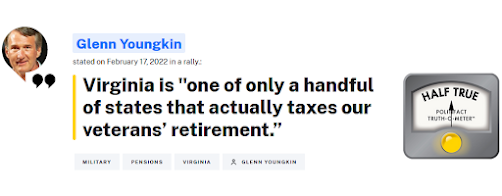
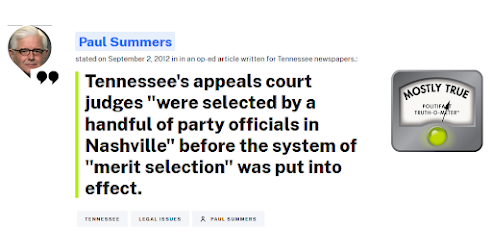
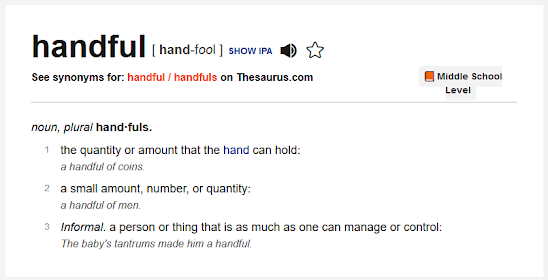
PolitiFact's penchant for pedantry justly earns it the derisive nickname "PolitiPedant."
Ready for another example? Let's go!

Youngkin claimed he won cities no Republican had won before in Virginia. Obviously a fact checker needs to find a reasonable definition of "city" to fact check Youngkin's claim.
PolitiFact's method credits the state of Virginia with 38 cities. Does that seem low? There's justification for it, even if it's the wrong justification for this fact check. We charge PolitiFact with failing to give readers anything approaching an adequate explanation.
The Independent City
Virginia has an unusual feature regarding its cities. PolitiFact mentions it casually, without explanation, as it sets up its fact-finding:
GOP results in Virginia citiesYoungkin won 14 of Virginia’s 38 independent cities: Bristol; Buena Vista; Chesapeake; Colonial Heights; Covington; Galax; Hopewell; Lynchburg; Norton; Poquoson; Radford; Salem; Virginia Beach and Waynesboro.
In its summary section PolitiFact said "Youngkin won 14 of Virginia's 35 cities in that [2021--ed.] election." Did Virginia have 38 or 35 independent cities in 2021? We expect PolitiFact will fix that inconsistency as though it was a typographical error. But we'll focus on the key term "independent cities," which PolitiFact does not explain to its readers.
There are 41 independent cities in the United States. Virginia counts as home to 38 of them.
So, what is an independent city? It's a city independent of the county (or counties?) in which it is located:
Virginia’s thirty-eight incorporated cities are politically and administratively independent of the counties with which they share borders, just as counties are politically and administratively independent of each other.
In Virginia, unlike the other 49 states, any city that isn't an independent city wears the official designation "town," regardless of its size. In Virginia, a town may be larger than an independent city. That runs counter to the typical understanding of the respective words "city" and "town." Cities, according to the typical definitions, exceed towns in size.
Youngkin in Context
Was Youngkin using Virginia's understanding of "city" when he addressed his New York audience? We judge there's little reason to think so. Yes, Youngkin himself, as governor of Virginia, must possess some awareness of Virginia's unusual technical standard for cities. But should Youngkin expect this audience to share that understanding? That seems like a stretch.
In the end, Youngkin isn't precluded from using the more common definition of "city" when he mentions cities in Virginia, especially to an outside audience. Many towns in Virginia fit the definition of "city" understood in other states, New York included.
PolitiFact doesn't waste any words at all on that possibility. Why?
For the journalistic team at PolitiFact Virginia, Virginia's particular approach to defining cities may count as second nature. That may have blinded the team to alternate possibilities. Or, PolitiFact may have stuck with Virginia's narrow definition of "city" to simplify its fact-finding. It's easier to check the list of independent cities to test Youngkin's claim than to check the list of independent cities plus towns-that-may-reasonably-fit-the-usual-definition-of-cities.
But a fact checker that checks facts using methods of convenience over methods of accuracy does not count as much of a fact checker. Maybe Youngkin won no cities that hadn't been won before by a Republican. We do not plan to fact check that. We'll simply point out that PolitiFact Virginia's fact check uses an unacceptable approach to the problem.
PolitiFact should have explained Virginia's unusual approach to designating cities, at minimum, if it failed to properly fact check Youngkin's claim according to the typical definition of "city."
Oversights such as these are what we should expect of biased fact checkers. And that's what we see from PolitiFact on a regular basis.